Make it a Party! Podcast — Season 1, Episode 3: Why Leaders Must Show Their Imperfections to Inspire, Guest Jermaine Jamison
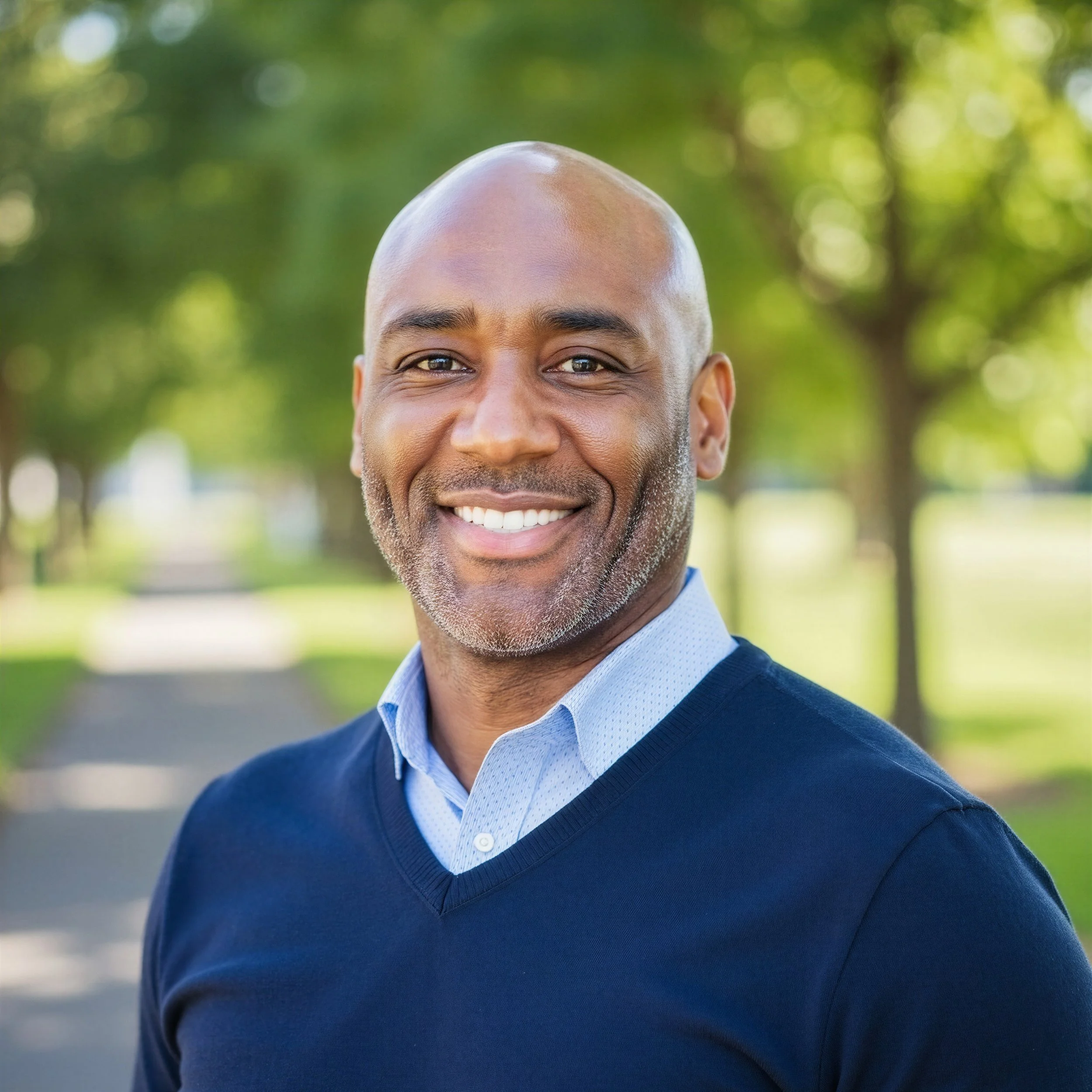
Season 1, Episode 3:
Why Leaders Must Show Their Imperfections to Inspire, Guest Jermaine Jamison
Today’s guest is Jermaine Jamison, an entrepreneur, keynote speaker, and human engagement strategist who helps leaders rethink how they engage people and build environments where individuals feel seen, trusted, and equipped to lead.Jermaine is the Co-founder and Managing Partner of Jamison Perry, a recruiting and staffing firm, and the President of 3E, LLC, Emerge. Evolve. Excel., a human engagement consultancy focused on leadership development and organizational growth.Through the lens of lived experiences, Jermaine challenges leaders to move beyond processes and focus on the human dynamics that shape performance, trust, and culture inside organizations.His work helps leaders create clarity, strengthen relationships, and unlock the potential that already exists within their people.
In this episode we discuss mental health, his humble beginnings, overcoming a lack of self-confidence, focusing on the human experience, embracing your struggles and finding solutions, and being vulnerable with your team -- as that's what makes you relatable and able to inspire!
Connect with Jermaine here:
https://www.linkedin.com/in/jermainejamison1/
Special thanks to our sponsor, Leader One Financial, for their recording space!
Music on this podcast is from the song "Grateful" by the local Kansas City band, The Canterberries. Stream and download their album, Flying Around. Follow them on Instagram for upcoming show dates @the_canterberries 🍓 🫐 🍒 https://www.instagram.com/the_canterberries/
Connect with the host, Haley Grayless, MSOD
https://www.instagram.com/the_haleygrayless
https://www.linkedin.com/in/haleygrayless/
Transcript is below. Please forgive any grammatical errors and misspellings, as this was created by the software system used to record and edit the podcast with minimal edits.
Transcript
Haley (00:00)
Okay, today's guest is Jermaine Jamison, who is the co-founder and managing partner of Jamison Perry, a recruiting and staffing firm, and the president of 3E Emerge, Evolve, and Excel, a human engagement consultancy dedicated to leadership development, organizational training, and talent strategy. So I met Jermaine through SHRM KC, and I'm so excited to have him on my podcast because there's so many things that we always talk about. Like every time we meet, it's like for a long time and I always learn amazing news stories about you even today before we started recording. So I want to welcome you to make it a party.
Jermaine (00:32)
Well, thanks for having me. And I am excited. And as I've said a number of times, sometimes we meet people and we just never know where the journey's gonna take us. So I'm glad to be
Haley (00:42)
I'm so glad. So when I mentioned SHRM KC, that's Society for Human Resources Management. And then I'm really glad you were there last week when I was actually the keynote speaker at the at the association. Thank you so much. Thank you. That was one of the first times I've done that specific keynote. And so I did it the next day in Branson also for their SHRM. And it went well. Yeah. Well.
Jermaine (00:51)
And you nailed it by the way. And here's what I will say I personally thought was great is the way you just made it supernatural and your personality shine through. And sometimes when we're up speaking in front of groups, it can be a little bit awkward, but I think you nailed it. So great job.
Haley (01:15)
Thank you so much. Thank you. I I was like more nervous than normal to do that one because it's like in front of people who do similar work. And I feel like when I present to people who have no idea anything about culture and leadership and it's all new to them, it's just I I I'm the expert anything I say, you know, is is elevated, I guess. But to people like that room, it's like, they're this I don't want this to sound too elementary, but I also don't want it to sound too out there. So I always add the humor and stuff like that in it, but I think people. Thank you so much. So, Jermaine, I wanna first of all talk about how did you start your businesses? Why did you wanna do this? And talk about the, I don't know, like life path that brought you to caring so much about great leadership.
Jermaine (01:56)
So I decided to start my businesses after working for large global firm and it was in staffing and the goal is to help people and organizations. And I just felt like it was time to do something I loved, but in a way that aligned with my value system, and that is giving people the opportunity to speak their truth. Even when they believe they aren't perfect. And I always tell people, we are all highly imperfect. And so the opportunity to every single day have the privilege to be a part of someone's journey just really, you know, appealed to me. And I wanted to do it on my own terms. And so that's what led me to starting Jamison Perry with my partner Katy Perry. Mm-hmm.
Haley (02:41)
But not that Katy Perry.
Jermaine (02:43)
Katie Perry. And it's been an amazing journey. And then with 3E, I started that because of something that was just important to me personally. And that was just helping people understand that as human beings, regardless of what our journey has been, we're all significant and we all matter. And it's something that I'm passionate about. And it goes back to my academic days as an employee state hornet where I have a Bachelor's degree in sociology with an emphasis in human development, family studies, and sociological paradigms. And I always tell people, I just love people. I I love to understand the why behind people's motivating factors.
Haley (03:16)
Yes.
Yeah. That that's I think that's why we vibed so much because that I literally joke about also when I was in like middle school in a youth group, I was so excited just be around people. Like I always wanted a bigger family. I only had like my parents and a little brother, and I wanted to have like a Brady Bunch or something situation. or at the time, Seventh Heaven, which did not age so well, but I was really into it in the time. But I would like be in youth group like say, like, I love people. Yeah. And I had a friend like tease me all the time like about that. And so, but it is something that.
I really care about too. I and I like to understand the why. Because I wanna know if we if I have any conflict with somebody, what could be the reason and how can we resolve that? And how can I understand people better just so I can love them better and connect with them better? Like why would we not want to do that? Right. But it is a unique thing. I don't think everybody cares about what we do necessarily.
Jermaine (04:04)
And you mentioned leadership. And so for me, I don't believe personally that leadership is anything based on theory. I believe leadership is about people. And leadership through the lens of lived experiences is is at the foundation of how I approach leadership. Because if everyone was to pause and think about leadership and tie that back to
Haley (04:22)
Yeah.
Jermaine (04:29)
their lived experiences and their leadership style. I believe that that's where there's going to be some clarity around their definition of a leader, their leadership style, and also what they might look for in others as it relates to leadership.
Haley (04:43)
Absolutely. When as you talk about like this lived experience, we've talked about your family life and how you grew up. And since this season of Make It a Party is kind of about mental health, but make it a party. I'd love to know like however much you want to share. Sure. Talk about that journey, the story about your mother and growing up and the challenges that you had and who it made you today.
Jermaine (05:03)
Yeah, so you know, I was born to a fourteen year old single mother in the urban core of KC Mo. And born to a fourteen year old kind of says it all.
Haley (05:12)
Right.
Jermaine (05:13)
and it was rough. And I always remind my mom that when I was 10, she was 24. And there were other siblings born in between that time. And I said, So for me, I had to understand how to live life as a young person without self esteem, without self confidence, and without a feeling of self.
worth. But then on the exterior, I still had to function. And so trying to sort all that out and carry all that weight as a as a 10 year old, 15 year old, it was hard. But looking back at it, it has really shaped who I am today. And one thing I'm a big believer in personally is I will always take less so others can have something because I know what it's like to have nothing.
And one of the one of the things I always share with people is when you talk about leadership.
Everybody lives in a way that makes sense to them. But growing up, did you wash your clothes in a washing machine and dryer? Yep. Well, I washed my clothes in a bathtub, took them to the kitchen in my sectionated apartment, turned the oven on high, opened the oven door, and that was my dryer.
But the one thing that is important to understand is we had the same goal of clean clothes. So fast forward all these years later, there's so many people that we come in contact with, maybe work alongside that.
Haley (06:29)
Exactly.
Jermaine (06:38)
Have the same goal as us, but maybe have a different route to accomplish the goal. So I think it's just very important to be mindful of everyone's journey matters. Everyone's journey is significant, even if it is extremely different from the journey that you've traveled. And so growing up in that type of environment that was highly chaotic, there's a lot of trauma. Mm-hmm. I had to.
I had to sometimes dig deep to get from not Thursday to Friday, Friday to Saturday, but from eight AM to nine AM.
Haley (07:08)
totally. It's not just one day at a time. It was one minute, one hour at a time.
Jermaine (07:12)
Yeah, and
With that, obviously there were some some negatives and some things that were very traumatic. And I would sometimes ask myself, would I change any of those things as bad as some of them were? Mm-hmm. And the answer is no, based on what I was able to learn from those moments.
Haley (07:30)
You wouldn't change those things. How how do you feel like they formed who you are? Especially being the eldest sibling. Yeah.
Jermaine (07:37)
So gratitude, I am grateful for not things, I am grateful for moments like this because there are so many people that left home yesterday to go to work and didn't return. And I just try to stay focused on that gift. As bad as things were.
Haley (07:38)
Yeah.
Jermaine (07:55)
I had another opportunity and another opportunity and another opportunity. And not everyone gets another opportunity. So I just focus on gratitude and I am thankful that I live to see another day or have the opportunity to make it to the next moment.
Haley (08:09)
Yeah. What are some of the things like therapy or other mental health practices that you used to help get you there?
Jermaine (08:15)
So growing up there was really no you know th therapy, you know, who what what? So you're gonna go talk to somebody?
Haley (08:21)
Especially for a man. Yeah.
Jermaine (08:22)
And it was a lot of internalizing those things and carrying a weight that I is in a weird way I was comfortable carrying it because growing up I lived in survival mode. And so it was just a part of it it was a part of the expectation that I had. You know, don't complain about anything, figure it out, figure it out, figure it out. And
Haley (08:43)
Yeah.
Jermaine (08:46)
Over time, that became a bit of a gotcha, but I'm so thankful for my wife because she is a mental health professional, but she always will tell me I'm not your therapist. But just to have her show me that what I thought was normal in the grand scheme of things, it is really abnormal. Yeah. And so I am an open book. I always tell people.
Haley (08:55)
Fair. Great boundary. Yes. Yes.
Jermaine (09:09)
I have nothing to hide. I want you to know everything you desire to know about me because it's my journey. And there are so many people I believe that find themselves in situations where they don't have the courage or believe they don't have the courage to raise their hand and speak and have a question because my gosh, people are gonna think I'm inadequate or no, I but I'm more than happy to raise my hand and and hopefully open the door for someone else to have the
courage or desire to say, you know what? It is okay to talk about it. It is okay to ask for help. It is okay to say, I don't know. Because those are the realities of of just living life. Frankly. I mean it's it just live life and you need help, ask for
Haley (09:49)
Right. And we have to model that as people who believe in asking for help and being vulnerable and being transparent. If we are not modeling it, then other people are not gonna do it. Because we also that when I when people ask me like what's what is the most important leadership tip that you have or what's the most important leadership quality a leader should have? I
I mean, confidence is great, but people expect them gonna say confidence, but I usually say humility. Yes. Because if you're not willing to admit when you were wrong and take ownership of when you need to apologize or when you failed at something, you're not modeling it for other people in that case. You're not making it psychologically safe enough to fail or be your full self. You're instead making everybody continuously wear a mask. Yep. And and it's it's very unhealthy for people to in general, but also for the culture of whatever organization they're in, right? Yeah. It's
And I mean, yes, confidence is so important and that's you should couple it with being humble, but nobody cares how confident you are if you're an asshole. You know, it just becomes arrogance at that point. Yeah.
Jermaine (10:47)
You know, confidence. I I someone said to me a long time ago, confidence is cockiness all dressed up. And growing up for someone that lacked self confidence, lacked self esteem, I I would sometimes find myself walking this fine line of are people gonna think that I am being braggadocious or what is it?
Haley (10:54)
Yeah.
Yeah.
Jermaine (11:09)
No, I am just proud of the fact that I've been able to overcome. Yes. I am proud of the fact that the one moment I remember that changed my life when I was 17 years old, and it was senior day for seniors playing football. And my mother wasn't around, and I didn't have a relationship with my father until I was 20 years old.
Haley (11:26)
Yeah.
Jermaine (11:31)
And so it's time and all my teammates are lined up with their parents or or or guardians ready to make that walk to the fifty yard line where you hug your father and you give your mother the rose and you walk to the sideline. Well, I'm looking around.
Kind of at that, what do I do now, River? And for such a long time, I was willing to accept that it just has to be this way. Mm-hmm. But then I had this thought, you know what? Does it doesn't have to be. So I asked a couple of parents of a teammate that's a junior that he didn't have to, you know, walk to 50 yard line if they would walk with me to
Haley (11:49)
Yeah.
Jermaine (12:10)
fifty yard line and they said yes. And I remember how it made me feel inside. And there were two things I I unpacked in that moment.
Is that number one?
I didn't have to walk alone because for a long time I was walking. And number two.
Haley (12:25)
I won't. Yeah.
Jermaine (12:27)
I asked for help. And those parents said yes. Yeah. They could have said no, but they didn't. They didn't ask any questions about, well, where are your parents? They just simply said yes. And that moment changed, changed me. And to this day, I struggle with telling people no. Because
Промі тел само.
Can sometimes keep them stuck in a place where they truly don't desire to be, but because someone wasn't willing to help them, they remain there. And that's just something that's cut deep within me. And someone asked me, I may have shared this with you previously, Jermaine, what is your biggest bottleneck? And I said it's telling people no. But
Haley (12:54)
Absolutely.
Jermaine (13:04)
Why tell someone no if you can say yes? Absolutely especially if that's yes is going to help them in some way.
Haley (13:10)
Absolutely. I think that's coming up a lot right now in culture and like online. I joke about being chronically online on TikTok and Instagram and stuff. Well, my friends are like, How do you do And it's like, well, I have a dog. I don't have kids, you know. So it's, but I mean, I I love the sociology of it. I'm not just like watching people dance, like funny dances. But one of the things that comes up a lot right now is how everybody wants a village, but no one wants to be a villager. And I think that because of the prevalence of mental health.
being so important and therapy being so important, I completely agree with it. Some people have too harsh of boundaries and they don't even communicate their boundaries well because a boundary is something I hold. I have to communicate my boundary with you. And if you are not respecting it, I have to hold the the the boundary line and hold you accountable. And there's usually like something that we have to do. Like I either cut cut off the conversation or whatever. There's a consequence, right? Or whatever it might be. And so I think that some people have too harsh of boundaries or protect their
individualism too much. Yes. And so talk about that. Like how do you see that either happening and what tips would you have for people to be more of a villager saying yes is one thing.
Jermaine (14:14)
So
We are all guilty of looking through the single lens of our existence. When in reality, we live in a world that is more of a kaleidoscope. And you know what a kaleidoscope is. If you take the kaleidoscope and you hold it up to a light and you give it a half rotation, what happens? It changes. You give it a full rotation, what happens? It changes. And I believe that is a very simple yet
Powerful representation of the realities of our communities, our friend groups, our work environments. And so it's really about understanding that things are always changing, and we have to be willing to acknowledge the things that are changing. And if the things that are changing require us to be more engaged or supportive, then we have to do it. But a lot of times.
When people don't do that, it's my opinion that it's because they're afraid to allow themselves to be vulnerable. It's not about what you don't know, haven't done, or believe you can't do. What do you know? What have you done? What can you do? And if people operated in that space more so than, well, here's what I don't know. No, what what do you know? That's the power. And operate in that space, and then it's easy to be in the village and and
Haley (15:19)
Right.
Jermaine (15:24)
Be a villager, if you will, because you are leveraging the things that you know you can do. You don't have to be like anyone else, just be the best version of yourself. And sometimes that's hard.
Haley (15:33)
Absolutely. People don't know themselves sometimes. And yes, some people have some self-awareness, but I realize we you know, doing workshops and stuff with my clients, I always start with leadership foundations and then getting into emotional intelligence and self-awareness. And that includes personality assessments, an EQ assessment, a self-awareness assessment. I like to do all those things so we have measurables. Yes. And so there's a common language that people can use around those things. And
As I ask and kind of assign those assignments, those assessments, people will sometimes say, like, well, do you want us to answer this based on who we are at work or who we are at home? And I know that we have to flex a little bit depending on our environment. However, I think if you're flexing enough that you would literally have of different personality and you don't know which one is your true self, that needs to be explored, like within ourselves. I'm not.
I wouldn't say chameleon because actually it's more like an octopus who changes to their surroundings versus moods for the chameleon. That's a whole other thing. Sure, sure. But I am so consistent. Like it's it's almost annoying, I think. Like I I'm pretty much the same person around my friends as I am around a CEO of a big company. Yep. Well you know, within reason. I'm not gonna make the exact same jokes or say the same things, but I I don't know, I'm pretty consistent. And I know not everyone is. And and so what are you what are your thoughts about that? So
Jermaine (16:49)
I I would agree with that. and I just think it goes back to lived experiences. For me personally, I am what you see is is what you get. And I only know one way to be. And for my entire life, I've just been an open book because I've had because I've always had to be that way to some degree. And when a person is different
At home versus work, and you can see that those are two extremes. The question is, why? Yes. What is missing from those environments? What is that person not willing to accept about themselves? What are the opportunities that exist for that person to ask a question or say, I need help? And it's a journey.
Asking for help can be difficult, but I would tell anyone watching this podcast, asking for help when you need it is life-changing. Because the other side of that is don't complain about what you don't have. Instead, ask yourself why you don't have it. But make sure you are looking in the mirror when you're asking that question because the person you see is the person that has the answer.
Haley (17:53)
yes. Yeah. I love that. Going back to the Michael Jackson song, The Man in the Mirror. Yes. Yeah. Like if you want to make a change you have to start with yourself. Yeah.
Jermaine (17:59)
Yes, yes, yes.
And
it sounds so simple, but it's really, it can be difficult because you have to acknowledge imperfections, but we are all highly imperfect. So understand that that's just who we are as human beings. Yes. And if your goal is to be perfect, then you're going to find yourself on the hamster wheel to know.
Haley (18:23)
Gosh, exactly. Exactly. And like I think we can embrace our imperfections. That actually came out recently. did you see the Gavin Newsom and Trump argument where Trump was saying something about how Gavin Newsom's wouldn't be a good president because he has dyslexia? No, I didn't do that. No, it was a recent thing. He and he kind of awkwardly called him the president of the United States. I think it was he misspoke and he was referring to something else, but and that's me giving him the benefit of the doubt.
but then Gavin Newsom came back and he said, Don't let anybody tell you that a learning disability or dyslexia or whatever is is something that's gonna keep you from being successful or reaching your dreams. I'm paraphrasing. But it's dyslexia can be your superpower. And I thought that was so beautiful because he learned other ways of like, how can I read differently? How can I use audiobooks instead? And look how successful he is. He's the governor of like literally one of the biggest GDPs in the world. And I mean, a very successful person. I think that that was.
Such an amazing opportunity to push back on something that could be really damaging to millions of people to hear from the most powerful person in the world. And that kind of goes back to I think how Biden handled the stuttering situation back when he, I think it was even when he was running for president. He would talk to little kids who also had a stutter and he would talk about what like ways that he used it and to
To understand himself better and to empathize with more people. And I thought that was so beautiful. Like we have these imperfections, but they can be our superpowers.
Jermaine (19:47)
Stuttering. So you just struck a chord with me. When I was a kid, I had a really bad stuttering problem. And my speech teacher was Mrs. Welsh. And my gosh, it was bad. And we would go, and it was an hour on Tuesdays and Thursdays from I believe it was.
Haley (19:49)
interesting.
Jermaine (20:05)
Fourth grade to sixth grade, and it was the flashcards. And she would always ask me, Jermaine, what are you thinking about when you're speaking?
Well, I I don't know. She what are you thinking about when you're speaking?
Well, I'm thinking about answering the question. But are you listening to the question? And so she helped me understand the way my brain was working. Your brain is just racing, just trying to answer the question, but you don't know. You're thinking about answering the question. But if the person is still asking the question, how can you effectively answer it? And so with that.
Haley (20:32)
wow.
Jermaine (20:48)
I'd want to speak and I would rush. And she says, just slow down. Mm-hmm. Slow down and listen. Slow down and think. And I still have to work on that today. If I'm on a stage in front of 20,000 people, no problem. But in those moments where if it's a negotiation or or something where
Haley (21:06)
There's more emotion. Yes. Some things on the line. I have to.
Jermaine (21:09)
Slow down because it will happen. And
That was rough as a kid. And I would tell anyone, whether it's stuttering or ADD or ADHD, it's dyslexia. Those are superpowers. Those are superpowers. And oftentimes you just need someone to help you understand the power in those things.
Haley (21:28)
Yes. And that's one of those things I don't think we should have to mask. I mean, of course we want to read well. We don't want to, you know, my dad I think has undiagnosed dyslexia and ADHD. And that's been a problem and with his, you know, whole life, his education and things like that. But I think that him having that, and then now I know I have ADHD and I can see I'm like, it's definitely a genetic thing. I mean, I for sure got it from him. I can now empathize with him and connect in that way where it's like.
You know, yeah, maybe you had to like repeat a grade and you you never like read as fast as other people and you didn't get the degree that your friends got or whatever, but you found a way to use other skills and the things you like about yourself. Like he's incredibly social. We're very similar in that way. Like I joke about if I call my dad in the evening, he is at a happy hour or he's at jazz night at this brewery or whatever. And yeah, that doesn't mean that you have to be this per like a perfect person. We're all imperfect and what maybe somebody has
No issues with learning disabilities or whatever it might be. Maybe they have none of that. They're very neurotypical. That's okay. Like they probably have other fallibilities. They have other issues that they've had to overcome. And we all have to find ways to connect with each other. And I think that that's a value a lot of people would say they have is yes, connectedness. I want to connect with people, connection. And they don't want to go deep enough.
Jermaine (22:44)
Well,
gosh, ADD is a thing. I was diagnosed with ADD after
Haley (22:50)
huh.
Jermaine (22:50)
College was a struggle for me because high school was a struggle for me, because middle school was a struggle for me, because elementary school was a struggle for me. And it wasn't a struggle because I lacked intelligence. It was the struggle because I couldn't stay focused long enough. And I tell people ADD and ADHD are not the same.
Haley (23:07)
Yeah.
Jermaine (23:13)
And when I think about my college experience, I was amazing in my theory classes, in my field studies, and and all the things around what I'm passionate about, the sociology aspect of it. Biology, you know, econ, those classes, my brain, I just couldn't stay connected long enough.
Haley (23:34)
Yeah.
Jermaine (23:34)
And then I began to ask myself, okay, why is this taking me so long?
Never thought it was ADD, but once I recognize there's something here that needs to change. Went to a doctor, answered all the questions, and she says, You are showing signs of ADD. great. What are my options? And so we talked through the options, put a plan in place. And I'm still working that plan today. And I would tell anyone,
Haley (23:55)
Amazing.
Jermaine (23:57)
If something seems a little bit off, it could be because something's a little bit off. Understand what it is, try to find a solution. Don't be embarrassed by it. Own it. Because that can serve as the springboard for someone else that is going through it to recognize that okay, it is okay. It is so safe, you know, and it is safe to go and try and find a solution to this problem.
that has been there, but you didn't really know it was a problem, you just thought it was just the way you had to operate.
Haley (24:25)
So that's what I thought. I mean, I didn't think I think maybe it was past five years I realized I really think that I probably have ADHD. And my doctor finally was like, Yes, I think we we've talked about this long enough that you are. And I think one of the things that gets people gets in the way is that it's so expensive to see a psychiatrist and especially without health insurance. I don't have health insurance. And so it would be, I mean, I think I I was getting quotes to be nine hundred or twelve hundred dollars to go through the process. And it's like, I really don't feel like I need to do that. Like
I know that we shouldn't self-diagnose, but I definitely have it. And understanding that about myself helped me just to say, like kind of going back to asking for help. I've asked my doctor for help. I've I've tried to figure this out. And now understanding that about myself, and it looks different in men and women and things like that. But I I I never thought I had it before because I don't have the hyperactive side. Right. And really I've heard people on like, you know, doctors on TikTok and things like that talking about how it's really mislabeled
you know, attention deficit disorder or hyperactivity disorder. It's really more of an dopamine uptake disorder or something. Like we're not getting enough dopamine from the boring tasks. We have to have novelty and excitement. And they like, I mean, people do like ADHD hacks and stuff on online. And one of the things they'll say is like, if you're getting bored doing something in your office, set up a little place in your bathtub. Like literally like put blankets in your bath, bring your computer in there and like the novelty just doing it somewhere else. Or
I mean, sometimes I can take my laptop to a friend's house, maybe her kid is running around, things are a little crazy. And it's weird. I yeah, I could be a little distracted, but for some reason I can also just the novelty of being like body body doubling, having somebody else there and having even like a little bit of like weird stuff going on, like this kid's running around being funny. I can answer my emails and focus on those a little bit better than if I'm sitting in a quiet room alone.
Jermaine (26:08)
You know what's so ironic and funny about that is some people are great at working remotely or from home. And I say, God, God bless you. But for me, and I tell people all the time, I go to my office and I open my blinds because for me, I need to see cars driving. I need to see birds. I need to see the
Haley (26:10)
Yeah.
Jermaine (26:29)
Guys that are coming to mold. I need to hear the leaf. I need
I need that. Sitting in my home office, and I do it from time to time where it's just like I c it it doesn't work for me. Well, why do you you don't mind the distractions? Those are not distractions. Those are soothing sounds for me. Silence is I struggle because now I'm thinking about the silence instead of maybe the word, but all the other background noise.
Haley (26:46)
yeah.
Yeah.
Yeah.
Jermaine (26:56)
Soothing to me.
Haley (26:57)
Interesting. Yes. It's so interesting. I love this. my gosh. I mean, when I think about those things too, it's like the coffee shop noises or getting together with a friend to co work, another entrepreneur or something. Cause I really miss having a team. I really miss that. And I, you know, eventually want to like build more of a team who I can work with in person, not just virtually, but all of that helps me get stuff done. And I I love to see that. what other like tips would you have for people who are like
An entrepreneur building a business. What did you learn from that show that you were on? You can talk about that too.
Jermaine (27:27)
Yeah, so I was on a reality television show, The Rebel Billionaire, Richard Branson's Quest for the Best. And so
Haley (27:34)
This was in two thousand four. Two thousand four
Jermaine (27:36)
for it's aired on it was prime time, seven PM, Tuesday nights on Fox. And it was for the opportunity to win a million dollars and be the president of Virgin Global.
Haley (27:47)
Forever? Like or for how long was that the president of Virgin Global?
Jermaine (27:50)
You know what? Great question. I want to say a year, but I'm not a hundred percent certain. But just to go through that process taught me a lot about entrepreneurship, taught me a lot about leadership, taught me a lot about taking risk, and taught me a lot about personal brand. So from a entrepreneurship standpoint.
Haley (27:54)
Okay, yeah.
Yes.
Jermaine (28:11)
Most people know Sir Richard Branson, billionaire, you know, Virgin, Virgin Global, Virgin Galactic, Virgin Mobile. I think back then there were three hundred and sixty five virgin branded companies. Wow. Well, a couple of contestants on the show that I had a chance to meet and become friends with, Sarah Blakely, co founder, or I said I'm sorry, founder and CEO of Spanx, and Sean Nelson.
CEO of LoveSack. And Sean ended up winning the competition. But from an entrepreneurship standpoint, Richard Branson was all about taking risk, but more specifically calculated risk. And he would tell stories and give examples of people that he had met over the years that had these great ideas. And his words were, but they'll take these.
Haley (28:47)
Yeah.
Jermaine (28:56)
Great ideas, put them in their back pocket and sit on them because they were afraid to take risk. And he said, But an entrepreneurship requires taking risk, but also calculated risk. And entrepreneurship is scary. Every single day we get out of bed and we are betting on ourselves. And it takes risk, it takes a little bit of craziness, it takes a lot of.
Haley (29:09)
Yeah.
Jermaine (29:21)
Different things, but I would say more so than anything, it takes courage. You have to be courageous. You have to know that you're gonna make mistakes and you're gonna fail, but that's just a part of it. But continue to bet on yourself. Love it. From a leadership standpoint, one of the things that was unreal and just incredible was Richard Branson took me and Sarah Blakely to Mozambique to spend the day with.
Nelson Mandela.
Haley (29:46)
The name dropping.
Jermaine (29:48)
I
love it. It's the journey, right? I love it. And his wife Gressha and we had meals with them and and we're sitting in in their home on their sofa and we're just talking. Well from I was listening just like couldn't believe Literally I was thinking to myself, how does this kid born to a fourteen year old single mom
Haley (30:02)
Right.
Jermaine (30:09)
Stood in line at food pantries for food, you know, went weeks without electricity, washed his clothes and a bathtub and so many other things. Find himself here. Mm-hmm. Having a conversation.
With Nelson Mandela.
sitting next to a billionaire and another future billionaire, it was it was it was surreal. Mm-hmm. And through the conversation
I asked Madiba, you know, he d his didn't want to be called Nelson, it it was Madiba.
Haley (30:38)
I didn't know that. Yes. That's his
Jermaine (30:40)
That's kind of his his his cultural given name. Okay. Madiba. And so I asked about being in prison.
For almost thirty years. And he said something that
is was emotional and still kind of gets me a little choked up. He said, Jermaine, I had thousands of opportunities.
to walk out of prison and be a free man, he said, but hundreds of thousands, if not millions, of South Africans, both black and white,
would still be under the control of the apartheid if I would have taken any of those offers.
Haley (31:11)
'Cause he would have to acquiesce.
Jermaine (31:12)
Well, because then, you know, they would have maintained control. And he talked about when he was released and ultimately became the president of South Africa, he talked about he would have never imagined after spending all those years in prison where he could see the capital from his cell that he would be the president.
And I was just like, wow, I don't know that I would be willing to go to jail for three hours for people I didn't know. I mean, you it was just a real thing. And he says, But the one thing he learned about leadership.
That one of the things that makes you a great leader is to be selfless. He said
Spent 30 years of his life in prison for people that he didn't know, but it was the right thing to do for the people. And I was like, wow. And again, I'm I'm sitting there as a as a as a spouse from Lanexa, Kansas, as a dad, as a neighbor, as a friend, really trying to wrap my mind around being in that moment, listening to those words from.
Madiba, Nelson Mandela was was was was absolutely mind blowing. And people would always say, my gosh, Jermaine, you know, tell me about spending time with with Nelson Mandela. And I would say to really appreciate that story, we have to start at the beginning of my story to show what can be. Sometimes we are just born into situations.
Haley (32:29)
Right.
Jermaine (32:34)
That from the looks of things are terrible. But that does not mean
By every single day having the courage to put one foot in front of the other, that you can get to your desired destination. Maybe not as fast as someone else, but if you keep moving, it might take you long, but you can get there if you just continue moving. And just another one of those amazing moments that I had a chance to experience. It was it was incredible.
Haley (33:00)
That is incredible. Incredible. And I can't believe I didn't know all that until today about you. And for the people who, you know, the Mandela effect. Are you familiar with Yeah, absolutely. I mean, you actually met him. Yeah. He so he's not dead. Is he dead now? yeah. I mean, so he but he wasn't gone in two thousand four. No. He didn't die in prison. No.
Jermaine (33:13)
Yeah, he he passed away.
No, no. No,
no, he did not. He did not. He was released prison 19. I'm just I want to get this right. 91, I believe. But when I will tell you this, when he passed away, I did have an opportunity to attend the memorial service. didn't didn't work out. I mean yeah, and it was just some other things that needed to be coordinated. But again, for me.
Haley (33:35)
You'd have to go to South Africa.
Jermaine (33:40)
I had a chance to spend the day and break bread with Nelson Mandela and have him speak directly to me. He says he said my name, which just was amazing. To talk about and learn about leadership from him.
Haley (33:54)
Incredible. That is incredible. I mean, and now you're sharing it with so many other people, and you've built a business on this kind of stuff. I want to talk about that concept of courage. I think that it's a word that gets thrown around a lot. And we, you know, we talk about, be courageous. There's Bible verses on it. And we compare movie characters to to being courageous in Lord of the Rings and The Lion of the Witch in the Wardrobe series and Chronicles of Narnia and Harry Potter and all these things.
And I feel like so it's one of my top values. And it's not because I'm necessarily great at it, but I think that taking risks and being the opposite of a coward is so important to me. That's part of being resilient, that's part of being authentic. And being inauthentic is like such an ick for me. I just I couldn't do it. That's why I'm pretty consistent in my personality. And I've noticed that I because I lean so much into
That value of being courageous and taking risks and being authentic. I've lost friendships. I've lost relationships. I've noticed that some of them and I've dated don't have that value. I mean, quite honestly, they have behaviors that are I would consider cowardly and friendships that I've lost instead of having the courage and the confidence or whatever it might be to address conflict and just do it directly. And you can be like, well, that's what my speech was about last week, but
Being direct and kind, being clear and gentle. Those are things that can coexist. They're not mutually exclusive. It takes practice and it takes the desire to have that value and to want to live it out, like to live that value out of being courageous and doing what's uncomfortable. But we have to do it. And it's sad, but like upon reflection, I think that's why I've lost some friendships.
Jermaine (35:18)
Absolutely.
Haley (35:34)
Because there's maybe a little conflict or disagreements that come up and they don't want to talk about it. And same with relationships. And, you know, that's what I'm hoping to find is a man and a community of people who continuously want to be courageous.
Jermaine (35:45)
You know, I always say, you know, you get what you earn. And for me, being courageous is a choice. And I've learned over the years that being courageous for me is easy.
Someone that has a different path or different lived experiences.
What courageous is for them, looks like for them, it's different. But I have to meet them where they are to understand that because for me, being courageous, true story here, was as a 12-year-old where I lived in in these section eight apartments to get to the food pantry, I had to walk
Down by Line Creek, north of the river, cross over I twenty nine.
Walk up the embankment to this food pantry and get food for myself and my siblings, walk and take that same route home.
Now sometimes I will start that that walk at four thirty when there's daylight.
Haley (36:42)
Yeah.
Jermaine (36:43)
When I'm returning it may have been seven thirty and it's dark.
Haley (36:46)
Is because the line was so long or 'cause the distance was so far? 'Cause that's that's a lot Yes. Because three hours for that trek sounds awful.
Jermaine (36:49)
I mean and you're to you I
If but that was that was that was the deal. And
Courageous was something I'm like, you know what? I don't think I'm gonna get hit by a a car because I have to make it to the other side.
Going right. And I don't think I'm gonna get hit by a car returning. I couldn't think about it that way. But courageous in those moments wasn't cross wow, crossing I-29 when cars are speeding, or not speeding, but driving that's 65 miles per hour.
In those moments, courageous for me was
having to answer to those folks that were providing the food why I was the one sh where's your where your parents and just not available.
And and knowing that that answer could have had an impact that maybe separated me and my siblings and having to think through those things in terms of gosh, courageous crossing I twenty nine, you know, for me.
Courageous was having to answer that simple question. Where are your parents? May not make sense to anyone watching this, but it's such a deep thing, like, hmm. But that's my journey. And for others, being courageous is is something that's probably very different. But if we know what it is and what it means to us, ultimately that's what matters.
Haley (37:52)
Right.
Absolutely. It's not just about like a physical jump or crossing of a dangerous street. It's it's also like choosing to be resilient, choosing to do the right thing, have that integrity and again, not be a coward. Right. You did what you had to do as the eldest sibling in your family. Yeah. Yeah. And
Jermaine (38:23)
You know, we all have things that we experience, but as best we can look for good. Look for the good because it's it's in there somewhere. It might not be just obvious right in front of you, but it's okay to dig and look for because you will find it. You will find
Haley (38:28)
Yeah.
Yes, I love that. And I think that what helps you in that process, what I've noticed like is one of your most obvious traits is your curiosity. You ask great questions of people. And even when we came into this studio, you were asking about this table. Who built it? where did it come from? And then the floor, like is it is this concrete sealed or or
Jermaine (38:51)
Love the table.
Haley (38:57)
Painted or whatever. And like even those things like about people and the built environment and things like that. And your curiosity, and I mean, curiosity is one of the most important traits that I find in a person because it's where we're not assuming we know why somebody did something. We're not labeling them or a thing with a certain way. one of the things, like you probably have also dealt with this with clients, is especially working with some HR folks, they hear so much frustrating stuff. And then employees on their teams will sometimes get labeled.
as a problem employee or an entitled millennial or Gen Zer or something. And that drives me crazy because I think that labeling people with those words obviously is bad for our own mindset toward other humans, but also it's rude. And then on top of that, I think that it also it causes literally like the inability to even make progress. Correct. To even
Solve the problem because you're not dealing with the problem. You've mislabeled a person. It's almost like even when you hear mostly men do this on those Manosphere podcasts and stuff, but labeling women with like a rated number, like where it's like, she's a 10, or you know, she's a four, but she thinks she's a 10 or whatever. I hate that. We should not be rating human beings on hotness or labeling them with negative words. So I don't know. What are your thoughts about that? And with curiosity.
Jermaine (40:17)
I just like to know and understand.
Haley (40:19)
Yeah, it goes back to the understanding
Jermaine (40:21)
I can support. I I've done a number of of trainings for organizations and and I have a process. It's a discovery process. And I always say, I have a lot of of of content and things, but it's never out of the box because I don't understand your environment. I need to. Why is this important? Who's going to be present? What are your desired outcomes? And
Haley (40:44)
Yeah.
Jermaine (40:45)
I've heard a lot of organizations say, Well, we want training on how to deal with difficult people. And and I'll say, Are you sure that's what you want? Their words, not mine. And I said, hmm. Difficult people? Well, difficult employees. I said, okay. And I said, now let me ask you a question. Let's let's say we decided to go that direction. Mm-hmm.
And as a leader within the organization, you attend that that training. Well, the individuals, the team members that report up to you here through the grapevine, that you went to a two or four hour training on how to deal with difficult employees. What do you think that might create within your
invi your work environment, not your work culture, your work environment.
You didn't s say they were difficult, but why are you their leader going to a training on how to manage or deal with difficult employees? Not okay. well we hadn't th and I said
Haley (41:44)
Right.
Jermaine (41:47)
Words matter. So is it that you're dealing with difficulty employees? Is there another way we can we can phrase that or present that? Well, what do you recommend? And I said, Well, I recommend we focus on how to elevate team members. But that requires us to understand them. Not as team members or employees, but more specifically as human beings. Because I always say to organizations when I'm wearing my staffing honor hat.
You do know that you're not interviewing a job seeker or a candidate or an engineer or an accounting professional. You are interviewing a human being who has come to that moment they're in with you with some human things you know nothing about. So while I understand you want someone that can do the job from a skill set standpoint, what about just understanding the human being? Because a lot of organizations want the
Perfect 10, but the perfect 10 doesn't exist, never has, never will. But how about you just simply ask the question to the person: why would you hire you? And give them the ability to speak their truth. Give them the ability to be a self-advocate. And don't focus on a candidate experience, focus on a human experience.
Haley (42:55)
Absolutely.
Jermaine (42:55)
And that's when things in my opinion change and you get the type of of outcomes that you want as it relates to hiring individuals within your organization.
Haley (43:05)
I love that. This is amazing. And I think we could spend another hour talking. I hope you'll have to come back for another episode. But as we wrap this up, Jermaine, tell us how people can get a hold of you and get connected with you, follow you online. And what do you have coming up that people should pay attention to?
Jermaine (43:21)
Gosh, what do have coming up? I have a number of things coming up. I have a number of trainings I'm doing for a couple different SHRM chapters here in the area. and a lot of times I'm just kind of on standby. so if an organization needs someone to come in and talk about training or coaching, but but wants something that is specific to their requirements, you know, certainly reach out.
I'm on LinkedIn heavily. I'm not a big I don't have TikTok. And I don't have Facebook. And for me, I'm I'm on LinkedIn, or they can go to my website, which is www.partner, the word partner, the number three, the letter E.com. If they are interested in any type of human engagement consulting or coaching or or keynote speaking training. And if they're interested in staffing support and services, www.jamesonperry.
Haley (43:46)
Mm-hmm.
Jermaine (44:10)
dot com and I always say I just simply want to be the I know a guy guy. So that's that's
Haley (44:16)
Yeah. That's me.
I love that. Well, thank you so much for being on Make It a Party.
Jermaine (44:22)
It has been a party and thank you so much for having me and and I will say this to you again. our paths crossed at that initial SHRM meeting last year for a reason. And I hope that we can put our superpower brains together and do something together in the future that creates opportunities for other people to recognize how great they are.
Haley (44:42)
Love that. Well said. Thank you so much.
Jermaine (44:44)
Thanks for having me.